Prospect vs Norton Commons vs Anchorage: picking the right Louisville suburb
May 21, 2026Deep-Dive
prospectnorton-commonsanchorageneighborhood-comparisoneast-endlouisville
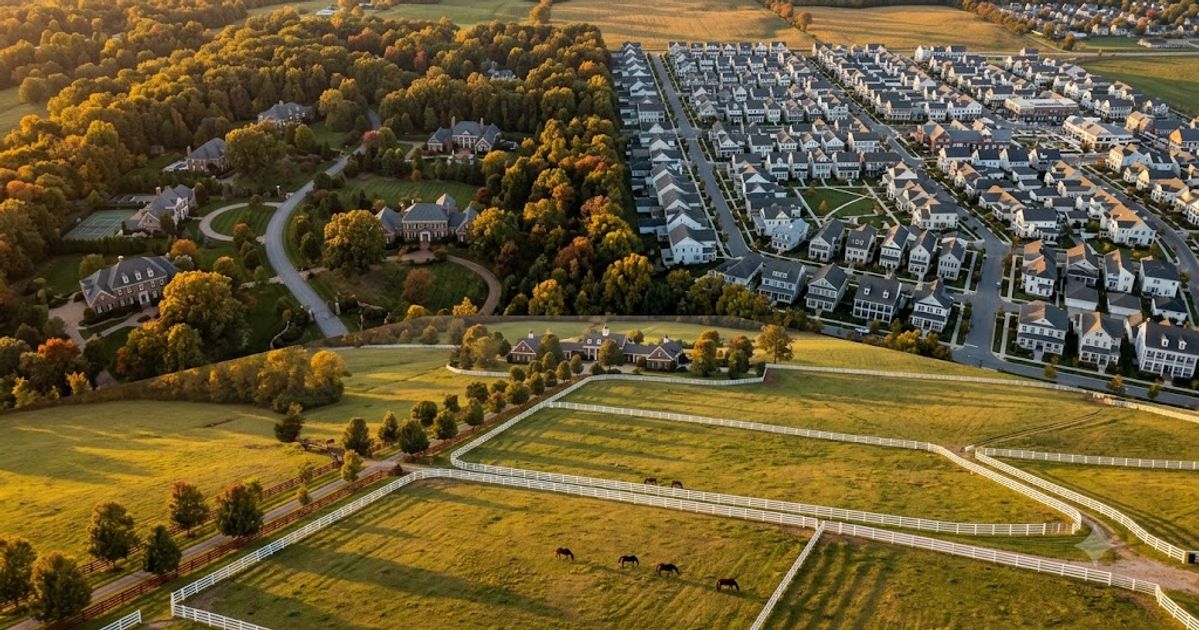
Prospect vs Norton Commons vs Anchorage: picking the right Louisville suburb
If you're shopping the east end of Louisville and trying to decide between Prospect, Norton Commons, and Anchorage, you're not alone. These three destinations account for an enormous share of the "family relocating to Louisville" and "move-up from inside the Watterson" conversations I have every week. They're all beautiful, all desirable, all expensive by Louisville standards, and all markedly different from each other once you spend a weekend in each one.
This post is my attempt to lay out the honest comparison — not a marketing hype piece, but the actual tradeoffs you should think about before committing. I'll cover vibe, schools, commutes, home prices (qualitatively — for live numbers check the individual neighborhood pages), HOA situations, and which lifestyle fits which community best. By the end you should know which one to go tour first.
Quick answer up front, for the impatient: Pick Prospect if you want a traditional east-end suburban experience with great value per square foot. Pick Norton Commons if you want a walkable, planned-community vibe with instant neighborhood amenities. Pick Anchorage if you want a luxury-tier home on larger lots in one of the most prestigious addresses in Kentucky. All three are solid choices for the right buyer — the mistake is picking the wrong one for your actual lifestyle.
What's the vibe of Prospect?
Prospect is the traditional northeast Louisville suburb — and I mean "traditional" in the best sense. It's a mix of established subdivisions built over the last forty years, mature trees, varied architectural styles, larger-than-average lots for east Louisville, and a general feel of settled suburban life. Homes range from 1980s brick ranches to 2020s custom builds, which creates price-point diversity that Norton Commons and Anchorage don't have.
The day-to-day experience in Prospect is car-first. You drive to the grocery store, drive to schools, drive to restaurants. That's not a knock on it — most American suburbs are car-first and most families are fine with it — but it's a meaningful contrast to Norton Commons where you can genuinely walk to everything. If your kids will eventually want to bike to friends' houses, Prospect's older subdivisions with proper sidewalks are better than the newer cul-de-sac layouts.
Prospect also covers a huge geographic area, so "living in Prospect" means very different things depending on which subdivision. The river-adjacent parts (Harrods Creek, Glenview) carry a different price tier and vibe than the inland parts. When someone tells me they're looking in Prospect, I always follow up with "which part of Prospect?" Details on specific subdivisions and live price data are on the Prospect neighborhood page.
What's the vibe of Norton Commons?
Norton Commons is the anomaly. It's a 600-acre master-planned New Urbanist community sitting inside the broader Prospect footprint, designed from scratch over the last twenty years with a specific philosophy: narrow streets, front porches, rear-loaded alleys, mixed residential and commercial, walkable everything. If you've ever been to Seaside, Florida or Kentlands in Maryland, Norton Commons runs in the same family.
The day-to-day experience is genuinely different from a standard suburb. You can walk your kid to a neighborhood coffee shop, walk to the pool, walk to the town-center restaurants, walk to Norton Commons' own public spaces and events. Your neighbors sit on front porches instead of back decks. There's a homeowners-association architectural review that enforces a specific design palette, which some buyers love (the consistency creates the feel) and others hate (you can't paint your door whatever color you want).
Norton Commons attracts a specific kind of buyer — people who grew up in walkable places and want that again, or people who visited and instantly fell in love with the community feel. It's also popular with relocating buyers from coastal cities who want a denser feel than standard Louisville suburbs offer. Since Norton Commons sits inside the Prospect ZIP code area and doesn't have its own dedicated authority page on this site, your best reference for the surrounding market data is still the Prospect neighborhood page.
If there's a downside to Norton Commons, it's cost and density. Homes tend to run higher per square foot than Prospect or traditional east-end subdivisions because of the amenity density and newer construction. Lots are small by east-end standards — you're trading yard for walkability. If you want acreage, this isn't it.
What's the vibe of Anchorage?
Anchorage is the quiet prestige play. It's a small historic city-within-a-city (officially its own incorporated municipality inside Jefferson County), with its own city government, police force, and — most importantly for families — its own public K-8 school. The town feels rural-suburban in a way almost no other Louisville community does. Winding lanes, horse properties, historic homes from the late 1800s mixed with multi-million-dollar new builds, and lot sizes that dwarf Prospect and Norton Commons.
Anchorage is the most exclusive of the three in every practical sense. The housing stock is the most expensive, the inventory is the smallest, and the overall population is significantly lower. A typical Anchorage listing attracts a different buyer pool than Prospect — buyers who specifically want the Anchorage name, the Anchorage school, and the Anchorage lot sizes. I've watched Anchorage homes sell in 48 hours and I've watched them sit for six months, depending entirely on how precisely the house fits the narrow pool of buyers actively shopping it.
For most first-time buyers or move-up buyers in the mid-four-hundreds to mid-six-hundreds range, Anchorage is genuinely out of reach. The entry point is higher. That's not a negative — it's just the reality. Check live market numbers on the Anchorage neighborhood page before you fall in love with the idea.
How do the schools compare?
All three communities feed into the Jefferson County Public Schools system — which is important to understand because JCPS uses a managed-choice enrollment model rather than strict neighborhood boundaries. Your home address puts you in a school cluster, and within that cluster you apply to individual schools based on your preferences. The exact feeder pattern changes periodically, so always confirm with JCPS before committing based on schools.
Prospect elementary and middle schools typically cluster with strong northeast options like Norton Elementary, Kenwood Station, and Ballard High School. These are consistently among JCPS's higher-performing schools in terms of standardized test scores and parent satisfaction surveys. Ballard High in particular carries a strong reputation for academics and extracurriculars.
Norton Commons families fall into the same northeast cluster as Prospect for public options, which means the same elementary and high schools are on the table. Many Norton Commons families also consider nearby private options — Kentucky Country Day, Louisville Collegiate, and St. Francis in the Fields are all within reasonable driving distance.
Anchorage is the outlier. Anchorage Public School (an independent K-8 public school, not a JCPS school) is one of the most sought-after public options in the entire Louisville metro and is a major reason families choose Anchorage specifically. After 8th grade, Anchorage students typically move on to either a JCPS high school (commonly Eastern High) or a private high school. The K-8 elementary experience at Anchorage Public is frequently cited as one of the single best public school experiences in Kentucky — though that reputation drives the home price premium in Anchorage, so you're paying for it indirectly.
Any of the three communities will serve your family well educationally; the right choice depends on how much the K-8 experience at Anchorage specifically matters to you versus the JCPS northeast cluster options.
How do the commutes compare?
Let me break this down by destination, because commute is the dealbreaker factor for a lot of buyers and the nuance matters.
Downtown Louisville (4th Street / Main Street): Prospect and Norton Commons run 20–30 minutes off-peak via I-71 and the Watterson. Rush hour pushes that to 35–45. Anchorage runs 25–35 off-peak and 40–50 during rush. None of these are terrible commutes by American standards, but none are great either.
UofL / medical campus: All three add 5–10 minutes to the downtown number because you cross the river or cut through additional traffic.
St. Matthews (Shelbyville Road commercial corridor): Prospect and Norton Commons are 10–15 minutes. Anchorage is 15–20. This is where the east-end communities genuinely excel — the Shelbyville Road retail and dining corridor is practically next door.
Louisville International Airport (SDF) / UPS Worldport: Prospect and Norton Commons are 25–35 minutes via the Watterson. Anchorage is 30–40. If your job or frequent-flyer lifestyle depends on quick airport access, the east end is not the best choice — consider the Okolona or Fern Creek corridors instead for airport proximity, or Mt. Washington for a rural-feeling commute that's still airport-accessible.
Rural east / horse country / Shelby County: All three are great launching points to get out to Simpsonville, Shelbyville, and Lexington. Anchorage is the most rural-feeling starting point.
How do home prices compare?
This is where I'm going to be deliberately qualitative rather than quoting specific dollar figures, because market data moves fast and the live numbers on the individual neighborhood pages are always more current than anything I'd type here.
Broad strokes: Prospect has the widest price range, Norton Commons skews to mid-upper-tier with newer construction premiums, and Anchorage is the most expensive of the three on a per-property basis because of lot size, historic premiums, and the Anchorage Public School effect.
For starter move-up budgets (roughly mid-four-hundreds to low-six-hundreds), Prospect has the deepest inventory. You can find traditional ranches, 90s builds with updates, and even some newer small-footprint homes in this range. Norton Commons occasionally has listings this low but they're usually smaller townhomes or condos. Anchorage is effectively out of reach at this budget.
For mid-luxury budgets (low-six-hundreds to low-nine-hundreds), all three are in play but feel different. Prospect gives you the most house and yard for the money. Norton Commons gives you the walkable community and newer construction. Anchorage gives you character and prestige with slightly less turnkey finish.
For luxury budgets (mid-nine-hundreds and up), Anchorage is the best-in-class option in the three. Prospect has luxury pockets (especially river-adjacent subdivisions), Norton Commons has luxury custom builds on the larger lots, but Anchorage carries the highest average ceiling for the truly high-end market.
For actual current numbers, scroll to the Market Snapshot block on each neighborhood page. The numbers there refresh monthly via Flex MLS and will tell you where the market actually sits the day you read this.
How do HOA fees and restrictions compare?
HOA experiences vary enormously across the three communities and it's one of the most under-discussed differentiators.
Norton Commons has the most structured HOA situation of the three. Dues are mandatory, architectural review is strict, and the design code is enforced. You cannot paint your front door a color that's not on the approved palette. You cannot install whatever mailbox you want. You cannot park a commercial vehicle in your driveway overnight. This level of oversight produces the consistent look and feel that makes Norton Commons what it is — but it's a dealbreaker for buyers who want total control over their property. The dues are meaningful (often several hundred dollars per month depending on the section) and fund the pool, playgrounds, town-center amenities, and common-area maintenance.
Prospect varies subdivision by subdivision. Some of the older subdivisions have no HOA at all — you own your house, you do what you want (subject to Jefferson County zoning). Other subdivisions, especially newer ones, have HOAs with modest dues focused on maintaining common areas. The rules are usually less aggressive than Norton Commons and the dues are typically lower. Always check the specific subdivision during due diligence, because "Prospect" covers such a wide geographic area that generalizations break down.
Anchorage has the lightest formal HOA structure of the three. The historic core of Anchorage has no HOA at all — the city government handles what an HOA would handle in other communities. Some of the newer developments on the fringes of Anchorage do have HOAs, but they're usually light-touch. The Anchorage experience is closer to "owning a house in a small historic town" than "living in a planned suburb."
Factor HOA cost directly into your monthly payment comparison. A Norton Commons house with a few hundred dollars of monthly HOA dues carries the same effective monthly cost as a Prospect house priced tens of thousands of dollars higher (if you capitalize the dues at current interest rates). That's a real difference when you're comparing listings side by side.
Which one is right for you?
Let me spell out the persona fits since that's usually what the decision comes down to.
Pick Prospect if: You want traditional east-end suburban life with solid schools and good value per square foot. You don't need to walk anywhere. You want a yard. You'll be driving to things anyway. You want architectural variety and options across a wide price range. Prospect neighborhood page has the full rundown.
Pick Norton Commons if: You want the walkable New Urbanist experience. You'll use the community amenities (pool, events, town center). You don't mind HOA oversight on exterior design. You want your kids to be able to walk to coffee shops and playgrounds without needing rides. You're coming from a walkable city and want to keep some of that lifestyle. You value community density over lot size.
Pick Anchorage if: You specifically want the Anchorage Public School K-8 experience for your kids. You want a larger lot, historic character, and the prestige address. You can afford the luxury price tier. You want the quieter, more rural-feeling east-end option. You like the exclusivity factor. Full details on the Anchorage neighborhood page.
What other Louisville suburbs should I consider?
If none of the three above quite fit — and that's absolutely a legitimate outcome after reading this — here are the alternative east-end and metro-adjacent options worth touring:
- **Louisville's east-end neighborhoods inside the Watterson** — Middletown, St. Matthews, Lyndon offer a meaningfully different urban-adjacent experience at a meaningfully different price point.
- **Mt. Washington and the Bullitt County corridor** — for buyers who want more yard, cheaper entry, and don't mind a longer commute.
- The Oldham County corridor — La Grange, Crestwood, and Goshen offer a rural-feeling alternative with different school district dynamics (Oldham County Schools rather than JCPS).
- The east-end river corridor — Glenview and Harrods Creek inside the broader Prospect footprint have some of the metro's most distinctive homes.
There's no single best answer among the east-end Louisville options — there's only the right fit for your specific lifestyle and budget. If you want my hands-on read after touring your shortlist, reach out and I'll walk you through the top contenders together.
Sources
- Norton Commons official community site (Wayback snapshot)
- City of Anchorage, Kentucky — official municipal site (Wayback snapshot)
- Anchorage Public School — school profile (Wayback snapshot)
- Jefferson County Public Schools — school finder & clusters (Wayback snapshot)
- Greater Louisville Association of Realtors — market reports (Wayback snapshot)
Frequently Asked Questions
Is Norton Commons technically in Prospect or somewhere else?
Norton Commons is a master-planned New Urbanist community that straddles the Prospect/Louisville boundary in northeast Jefferson County. It doesn't have its own dedicated authority page on this site because it sits inside the Prospect footprint for MLS and municipal purposes. Think of it as a distinct subdivision with its own character, HOA, and amenities rather than a standalone neighborhood. Search results for Norton Commons will show up under the Prospect neighborhood page.
Which has the best public schools of the three?
All three feed into Jefferson County Public Schools, which means school assignment is based on the county's managed-choice plan rather than strict neighborhood boundaries. That said, families in Prospect typically feed into strong elementary and middle schools in the northeast cluster, Anchorage has its own standalone K-8 (Anchorage Public School) which is one of the most sought-after public options in the metro, and Norton Commons families have access to the same cluster as Prospect plus private options nearby. If schools are your #1 factor, Anchorage is the historical winner — but call JCPS to confirm current assignment rules before committing.
How different are the home prices across the three?
Prospect and Norton Commons sit in roughly overlapping mid-to-upper price tiers, with Norton Commons trending higher per square foot due to its newer construction and amenity density. Anchorage is the most expensive of the three by a meaningful margin — it's a luxury-skewed market with a smaller inventory pool and larger lots. For exact current numbers check the live Market Snapshot on each neighborhood's page, which pulls monthly data from Flex MLS.
What's the commute situation for downtown Louisville?
Prospect to downtown Louisville via I-71 runs 20–30 minutes in normal traffic, stretching to 35–45 in rush hour. Norton Commons is similar since it's geographically adjacent. Anchorage to downtown is longer — 25–35 in normal traffic, 40–50 in rush hour — because of its deeper east-end positioning. For UofL or St. Matthews destinations, all three are roughly equidistant. If your job is at UPS Worldport or the airport, Prospect and Norton Commons are slightly closer than Anchorage.
Which one is the best fit for families with young kids?
Norton Commons wins this one for most families I've worked with. The New Urbanist design — walkable streets, a central pool and park, neighborhood events, sidewalks that connect to playgrounds — creates an instant community for kids. Prospect proper also has great family amenities but is more car-dependent. Anchorage is beautiful but quieter and more spread out, which fits some families perfectly and bores others. It really comes down to whether you want the planned-community vibe or the more traditional suburb feel.
Are there HOA fees in all three neighborhoods?
Norton Commons has mandatory HOA dues because of the shared amenities and design code enforcement. Prospect varies subdivision by subdivision — some have HOAs, some don't. Anchorage has very limited formal HOA structure in most of the older parts of the community. Always check the specific property's HOA status during your due diligence period and factor any dues into your cost-of-ownership calculation.
Ready to Move?
Contact MeLooking for your dream home?
I'd love to help you find the perfect place. Let's talk about what you're looking for.